My research integrates genomic and morphological data from both extinct and extant taxa to reconstruct phylogenetic relationships and examine morphological evolution across deep-sea and reef-associated fishes. By combining large-scale genomic data and morphology, I aim to clarify the evolutionary origins and infraordinal relationships of several enigmatic groups through a holistic phylogenetic lens. Incorporating extinct taxa into total-evidence frameworks allows me to better understand evolutionary patterns and morphological innovation through deep-time.
Beryciformes and Trachichthyiformes
These early-diverging acanthopterygians exhibit remarkable diversity in form, ecology, and habitat preference. For my dissertation, I am currently working on incorporating both fossil and extant representatives to investigate habitat shifts, bioluminescence, and sexual dimorphism across these lineages, resolving phylogenetic relationships and uncovering patterns of morphological evolution.
Anglerfishes (Lophioidei)
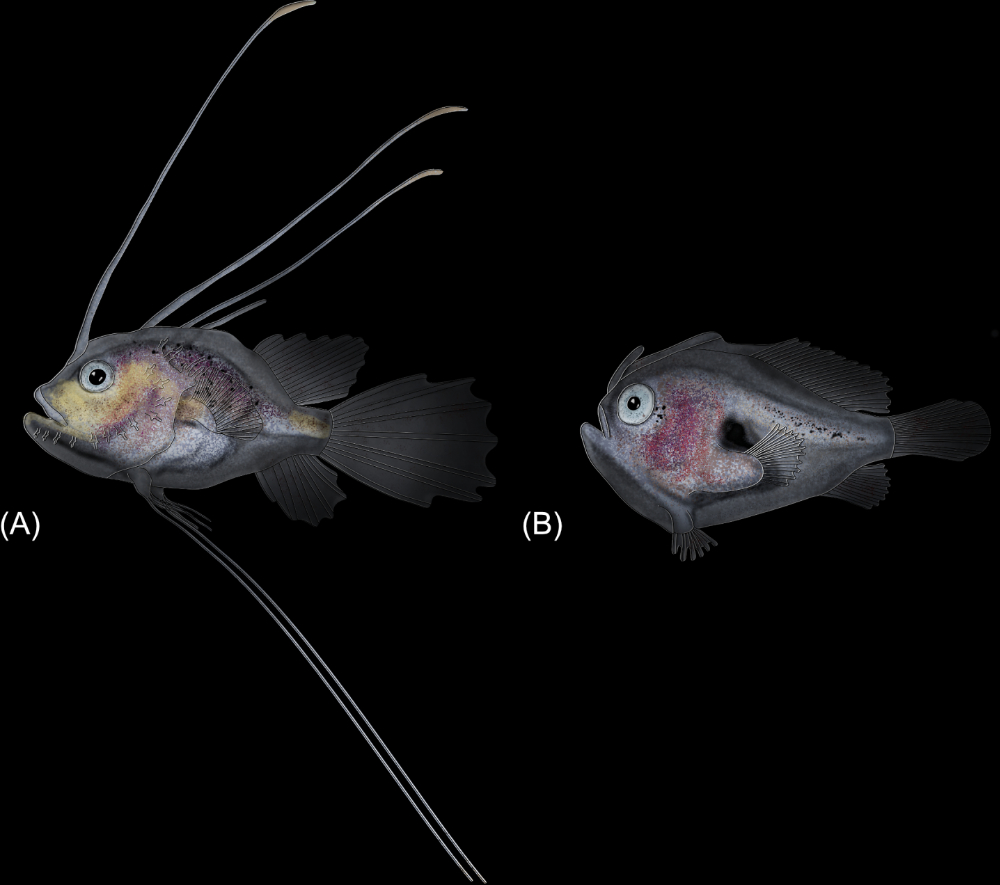
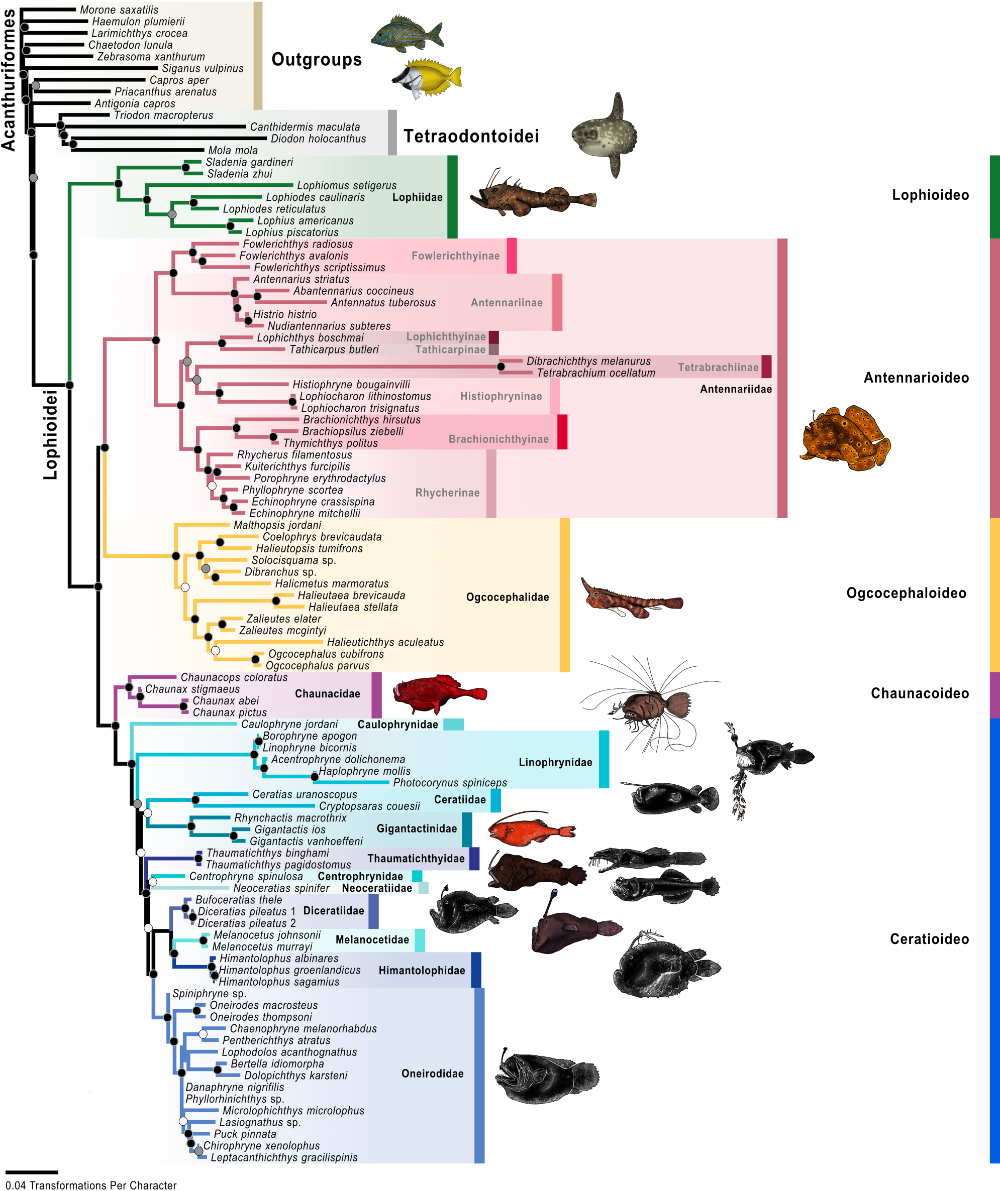
My prior research on anglerfishes investigates their extraordinary adaptations for predation, including mechanical, chemical, and bioluminescent lures, as well as the habitat transitions this group has undergone. Using a total-evidence framework combining ultrconserved gene elements, mitochondrial data, and morphology, I have reconstructed the most comprehensive phylogeny of Lophioidei to date, revealing key evolutionary transitions and how habitat shifts—especially into pelagic deep-sea environments—shape body form and diversification.
Methodological Approach
Across all projects, I integrate comparative morphology with genomic data, including:
- Expanding morphological character matrices for both extinct and extant taxa.
- Sequencing additional UCEs for broader taxonomic coverage.
- Working directly with collection specimens, including formalin-fixed specimens, cleared-and-stained material, and CT scan data.
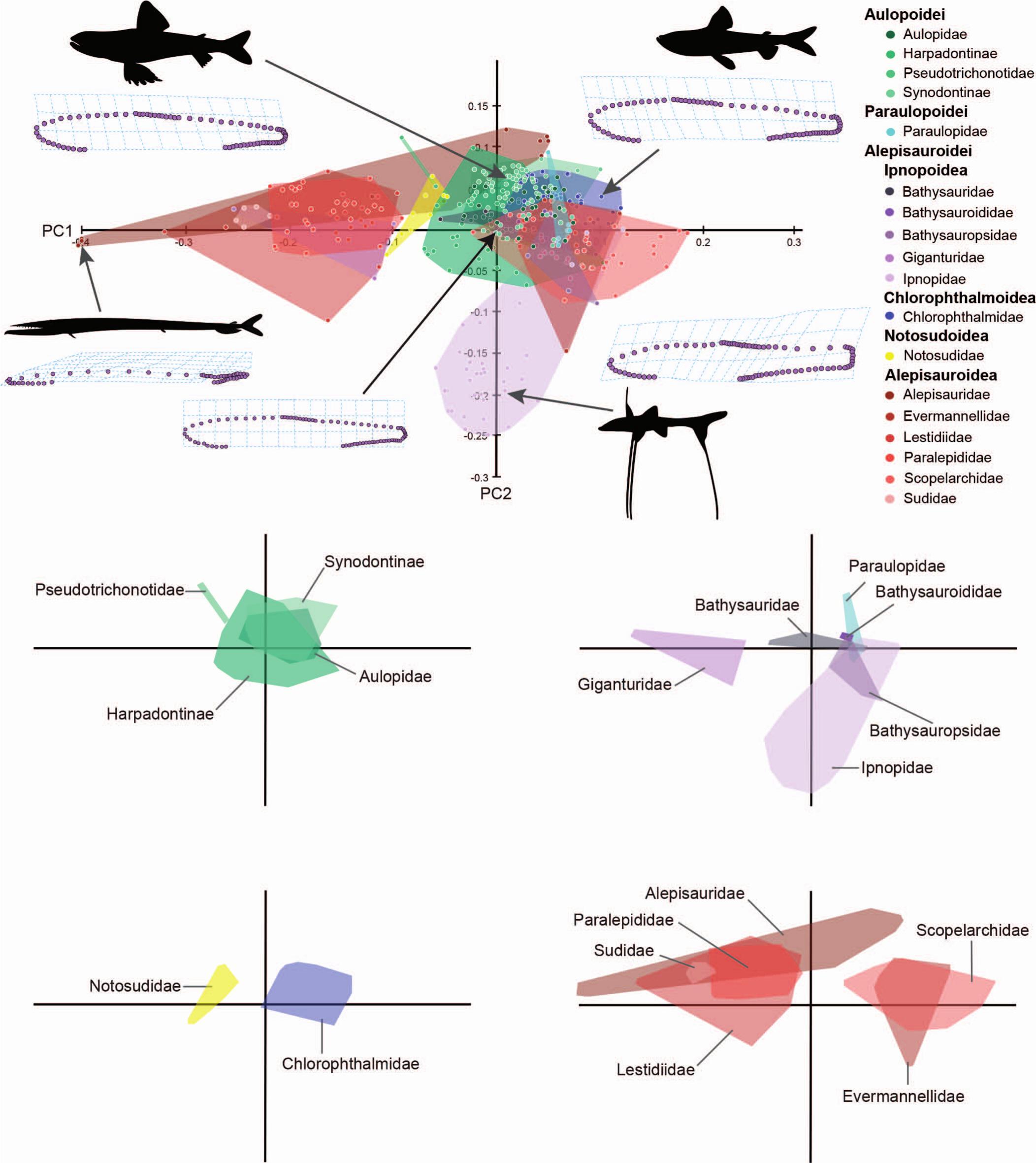
- Conducting geometric morphometric analyses to examine body-shape evolution in relation to ecological and evolutionary transitions.
This integrative approach allows me to link form, function, and evolutionary history, providing new insights into the diversification of deep-sea and reef-associated fishes, the origins of extreme morphological adaptations, and the tempo of evolutionary change following major environmental shifts.